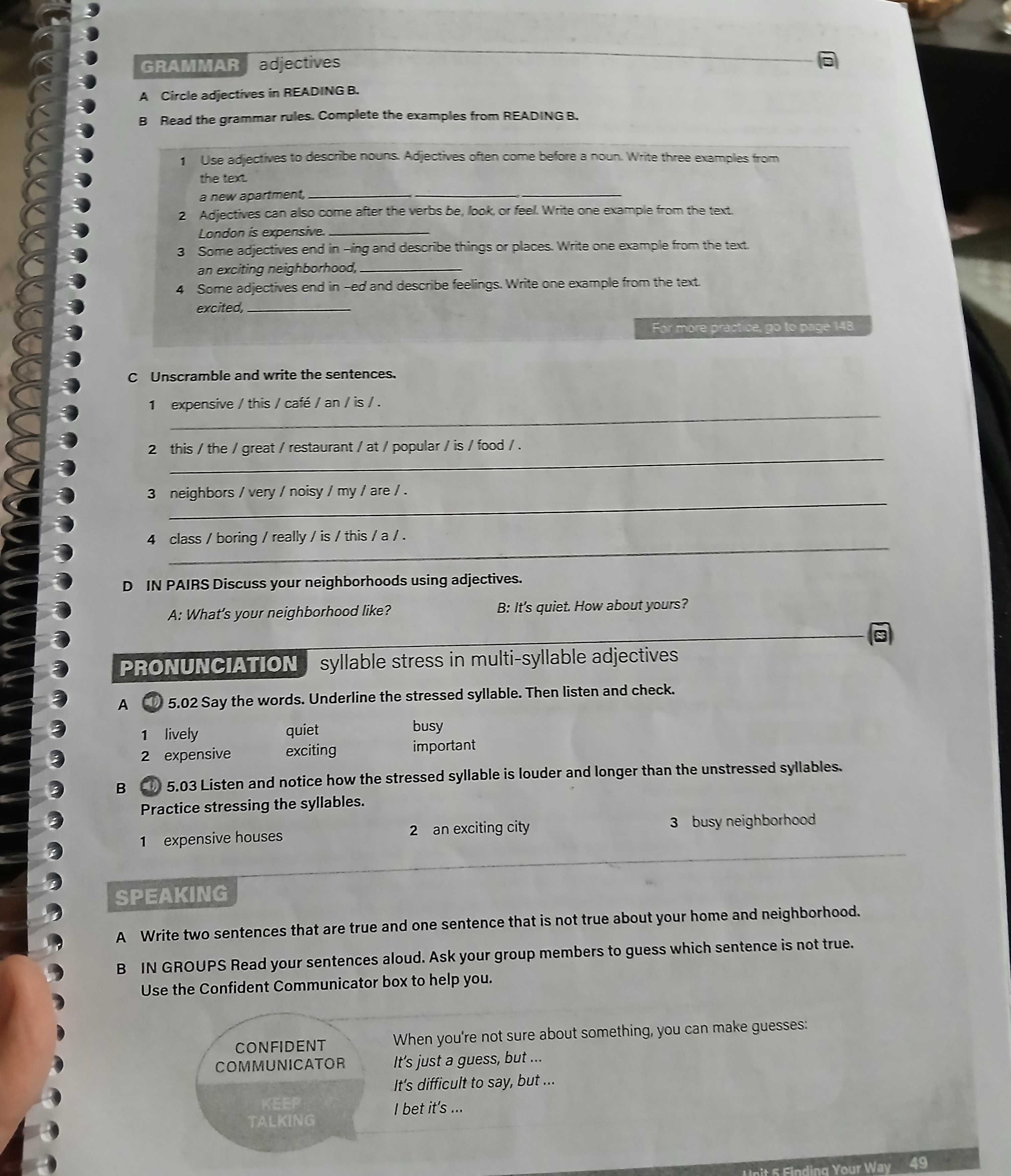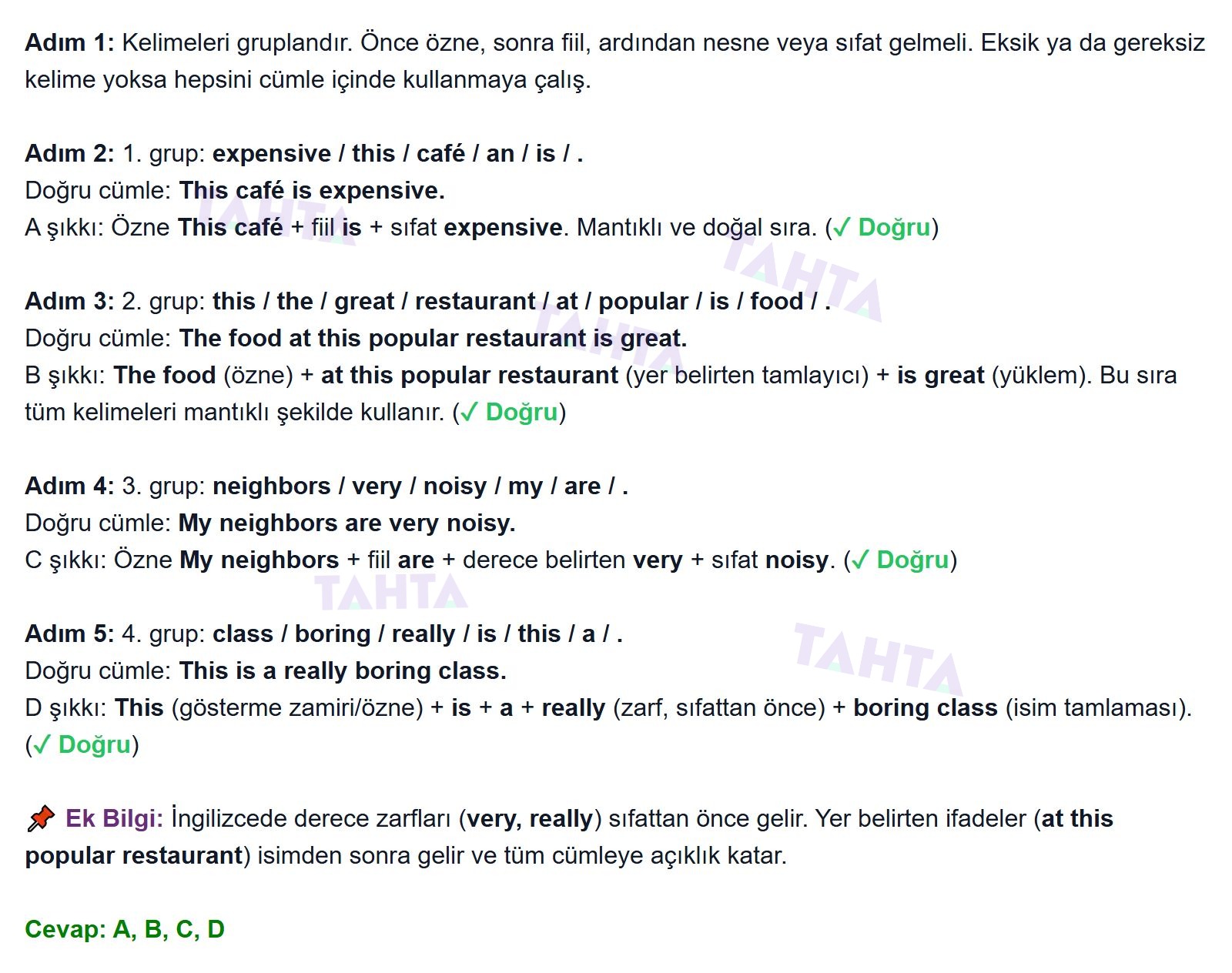
GRAMMAR adjectives A Circle adjectives in READING B. B Read the grammar rules. Complete the examples from READING B. 1 Use adjectives to describe nouns. Adjectives often come before a noun. Write three examples from the text. a new apartment, ____________, ____________ 2 Adjectives can also come after the verbs be, look, or feel. Write one example from the text. London is expensive. ____________ 3 Some adjectives end in -ing and describe things or places. Write one example from the text. an exciting neighborhood, ____________ 4 Some adjectives end in -ed and describe feelings. Write one example from the text. excited, ____________ For more practice, go to page 143 C Unscramble and write the sentences. 1 expensive / this / café / an / is /. 2 this / the / great / restaurant / at / popular / is / food /. 3 neighbors / very / noisy / my / are /. 4 class / boring / really / is / this / a /. D IN PAIRS Discuss your neighborhoods using adjectives. A: What's your neighborhood like? B: It's quiet. How about yours? PRONUNCIATION syllable stress in multi-syllable adjectives A 5.02 Say the words. Underline the stressed syllable. Then listen and check. 1 lively quiet busy 2 expensive exciting important B 5.03 Listen and notice how the stressed syllable is louder and longer than the unstressed syllables. Practice stressing the syllables. 1 expensive houses 2 an exciting city 3 busy neighborhood SPEAKING A Write two sentences that are true and one sentence that is not true about your home and neighborhood. B IN GROUPS Read your sentences aloud. Ask your group members to guess which sentence is not true. Use the Confident Communicator box to help you. CONFIDENT COMMUNICATOR When you're not sure about something, you can make guesses: It's just a guess, but ... It's difficult to say, but ... I bet it's ... KEEP TALKING Unit 5 Finding Your Way 49