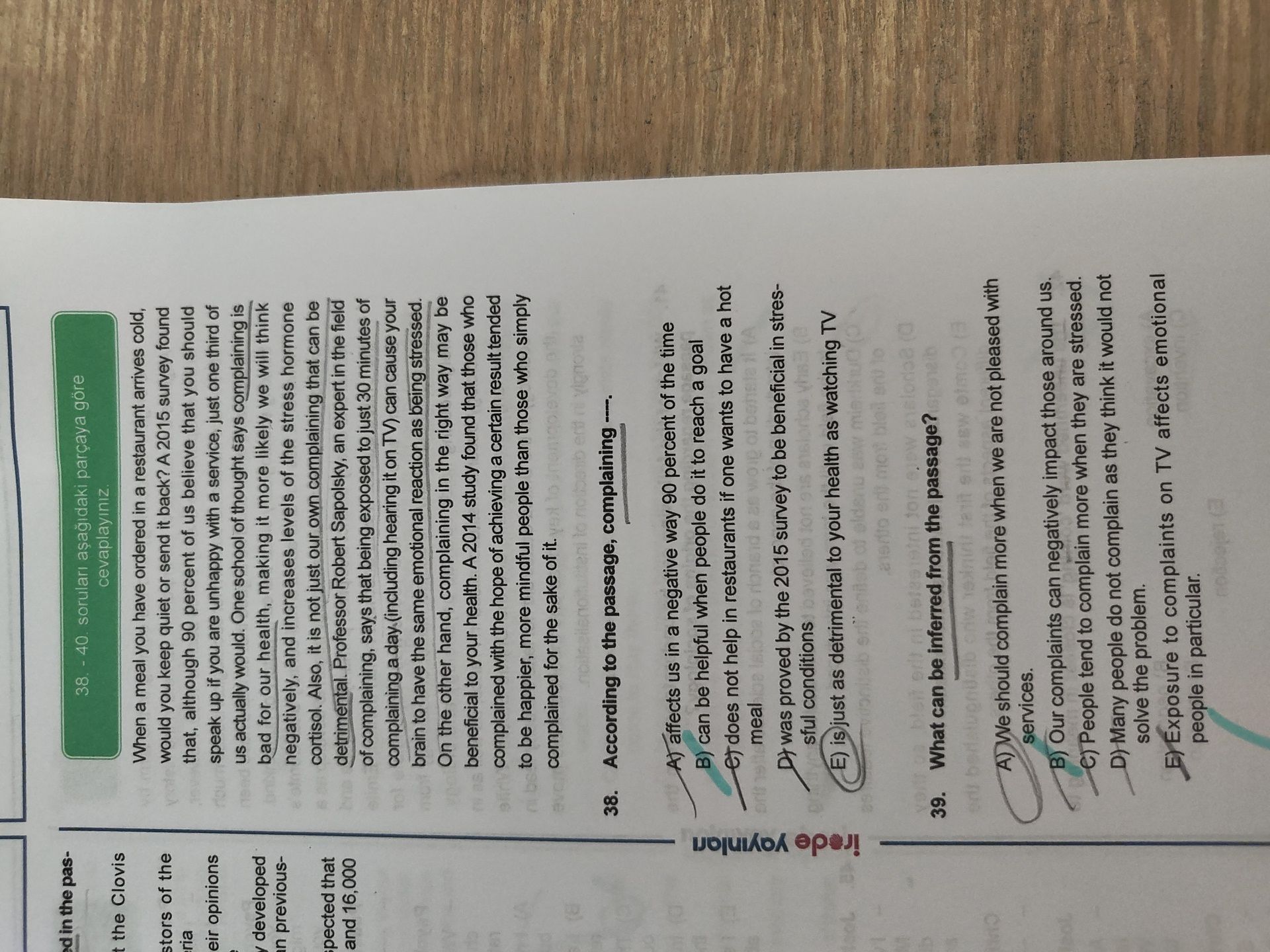
When a meal you have ordered in a restaurant arrives cold, would you keep quiet or send it back? A 2015 survey found that, although 90 percent of us believe that you should speak up if you are unhappy with a service, just one third of us actually would. One school of thought says complaining is bad for our health, making it more likely we will think negatively, and increases levels of the stress hormone cortisol. Also, it is not just our own complaining that can be detrimental. Professor Robert Sapolsky, an expert in the field of complaining, says that being exposed to just 30 minutes of complaining a day (including hearing it on TV) can cause your brain to have the same emotional reaction as being stressed. On the other hand, complaining in the right way may be beneficial to your health. A 2014 study found that those who complained with the hope of achieving a certain result tended to be happier, more mindful people than those who simply complained for the sake of it. 38. According to the passage, complaining —.
A) affects us in a negative way 90 percent of the time
B) can be helpful when people do it to reach a goal
C) does not help in restaurants if one wants to have a hot meal
D) was proved by the 2015 survey to be beneficial in stressful conditions
E) is just as detrimental to your health as watching TV