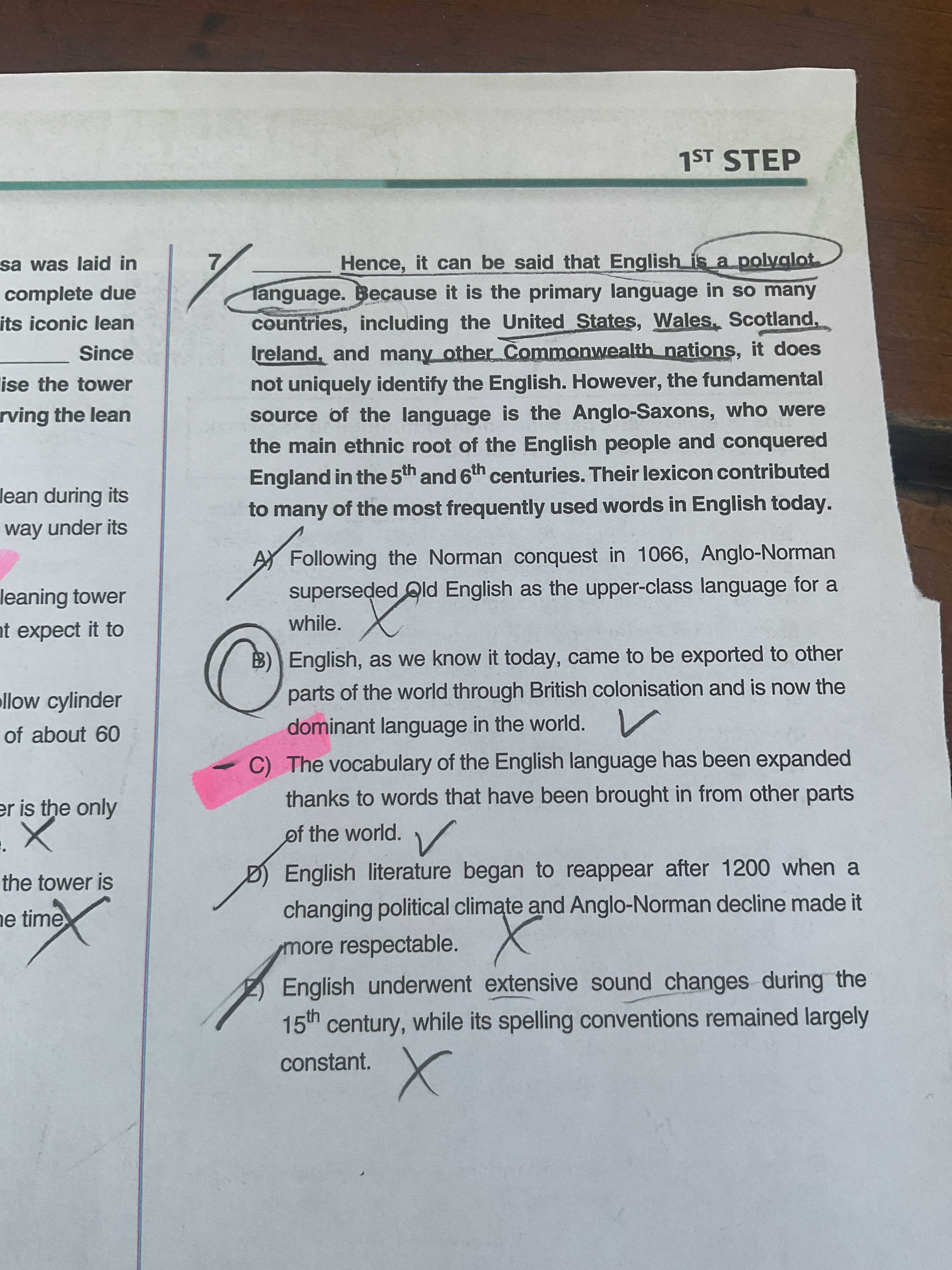
Hence, it can be said that English is a polyglot language. Because it is the primary language in so many countries, including the United States, Wales, Scotland, Ireland, and many other Commonwealth nations, it does not uniquely identify the English. However, the fundamental source of the language is the Anglo-Saxons, who were the main ethnic root of the English people and conquered England in the 5th and 6th centuries. Their lexicon contributed to many of the most frequently used words in English today.
A) Following the Norman conquest in 1066, Anglo-Norman superseded old English as the upper-class language for a while.
B) English, as we know it today, came to be exported to other parts of the world through British colonisation and is now the dominant language in the world.
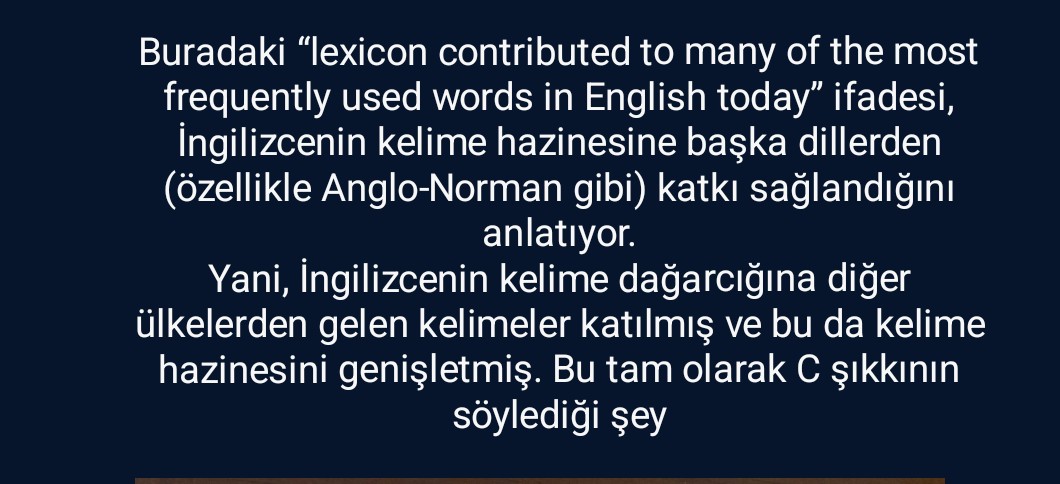
C) The vocabulary of the English language has been expanded thanks to words that have been brought in from other parts of the world.
D) English literature began to reappear after 1200 when a changing political climate and Anglo-Norman decline made it more respectable.
E) English underwent extensive sound changes during the 15th century, while its spelling conventions remained largely constant.