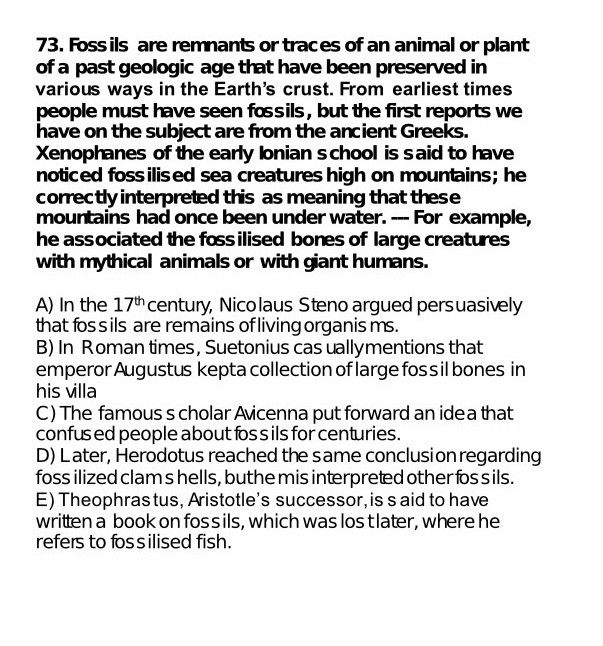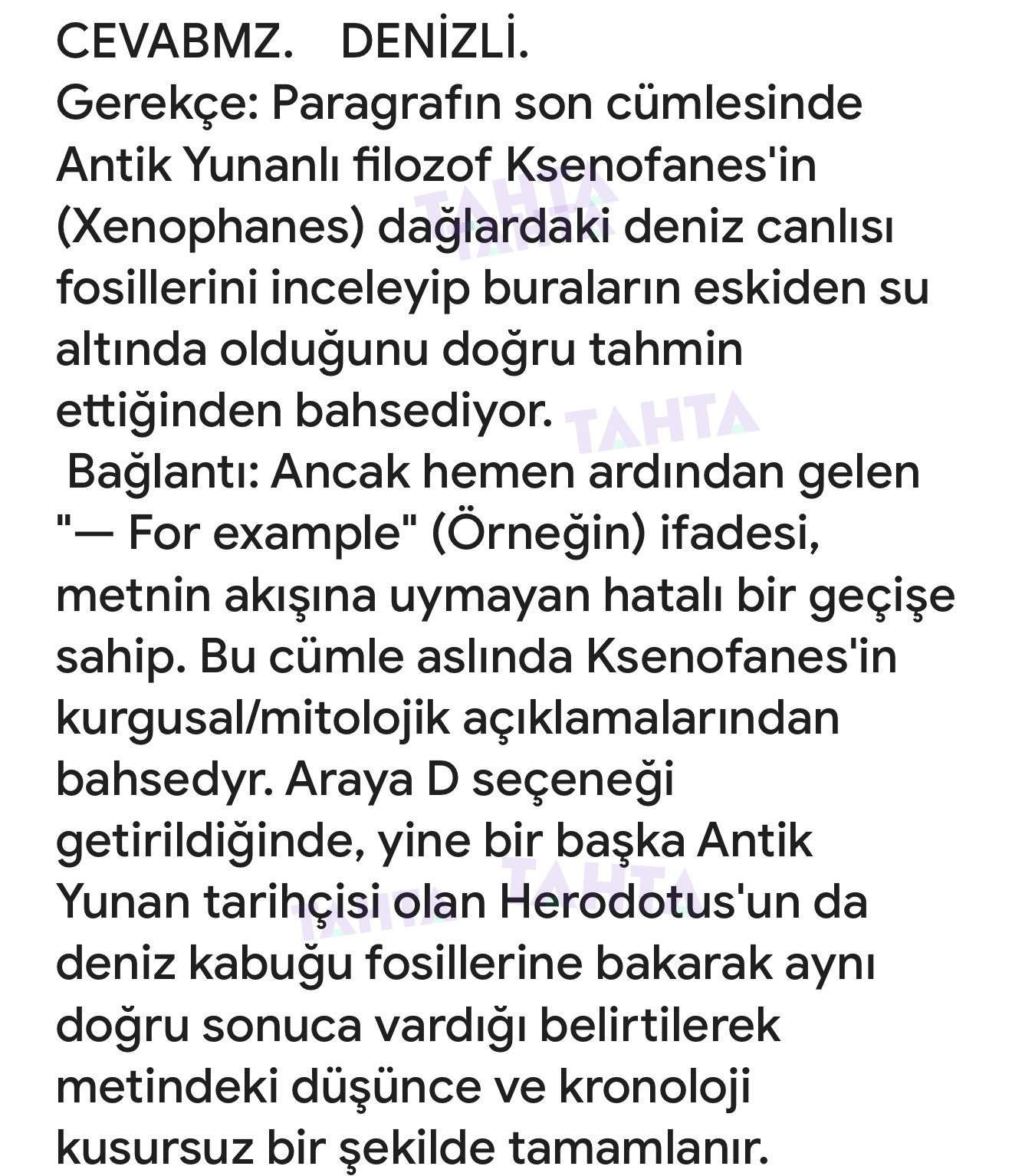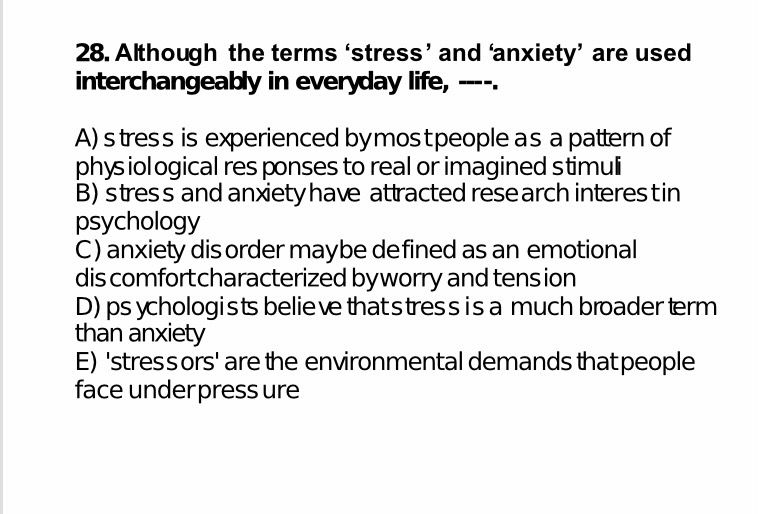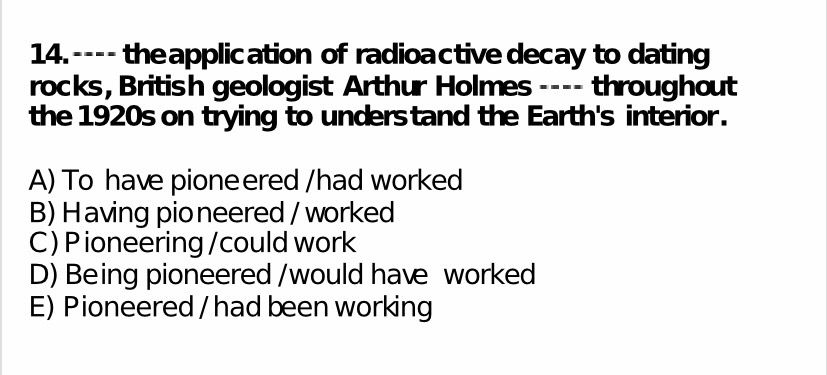
Fossils are remnants or traces of an animal or plant of a past geologic age that have been preserved in various ways in the Earth's crust. From earliest times people must have seen fossils, but the first reports we have on the subject are from the ancient Greeks. Xenophanes of the early Ionian school is said to have noticed fossilised sea creatures high on mountains; he correctly interpreted this as meaning that these mountains had once been under water. --- For example, he associated the fossilised bones of large creatures with mythical animals or with giant humans.
A) In the 17th century, Nicolaus Steno argued persuasively that fossils are remains of living organisms.
B) In Roman times, Suetonius casually mentions that emperor Augustus kept a collection of large fossil bones in his villa
C) The famous scholar Avicenna put forward an idea that confused people about fossils for centuries.
D) Later, Herodotus reached the same conclusion regarding fossilized clam shells, but he misinterpreted other fossils.
E) Theophrastus, Aristotle's successor, is said to have written a book on fossils, which was lost later, where he refers to fossilised fish.